Navigating the modern gaming landscape as an adult can be tough. Balancing work, family, and personal life often leaves little room for extensive gaming sessions. This month, the Steam Deck game system continues to trend as a powerful, portable solution, perfect for gamers aged around 36 who value flexibility and high-quality experiences without the desktop tether. Our comprehensive guide helps you cut through the noise, offering practical tips and tricks to optimize your Steam Deck game system. Discover how to conquer setup challenges, maximize performance, find the best games for short bursts, and even connect with fellow gamers on the go. We address common pain points like hardware upgrades on a budget and balancing your passion with daily responsibilities, ensuring you get the most value for your money. This resource is designed to keep you current with 2026 gaming trends, from mobile dominance to social play, all while avoiding hype and focusing on real-world solutions for your Steam Deck game system experience.
What are the best games for short play sessions on the Steam Deck?
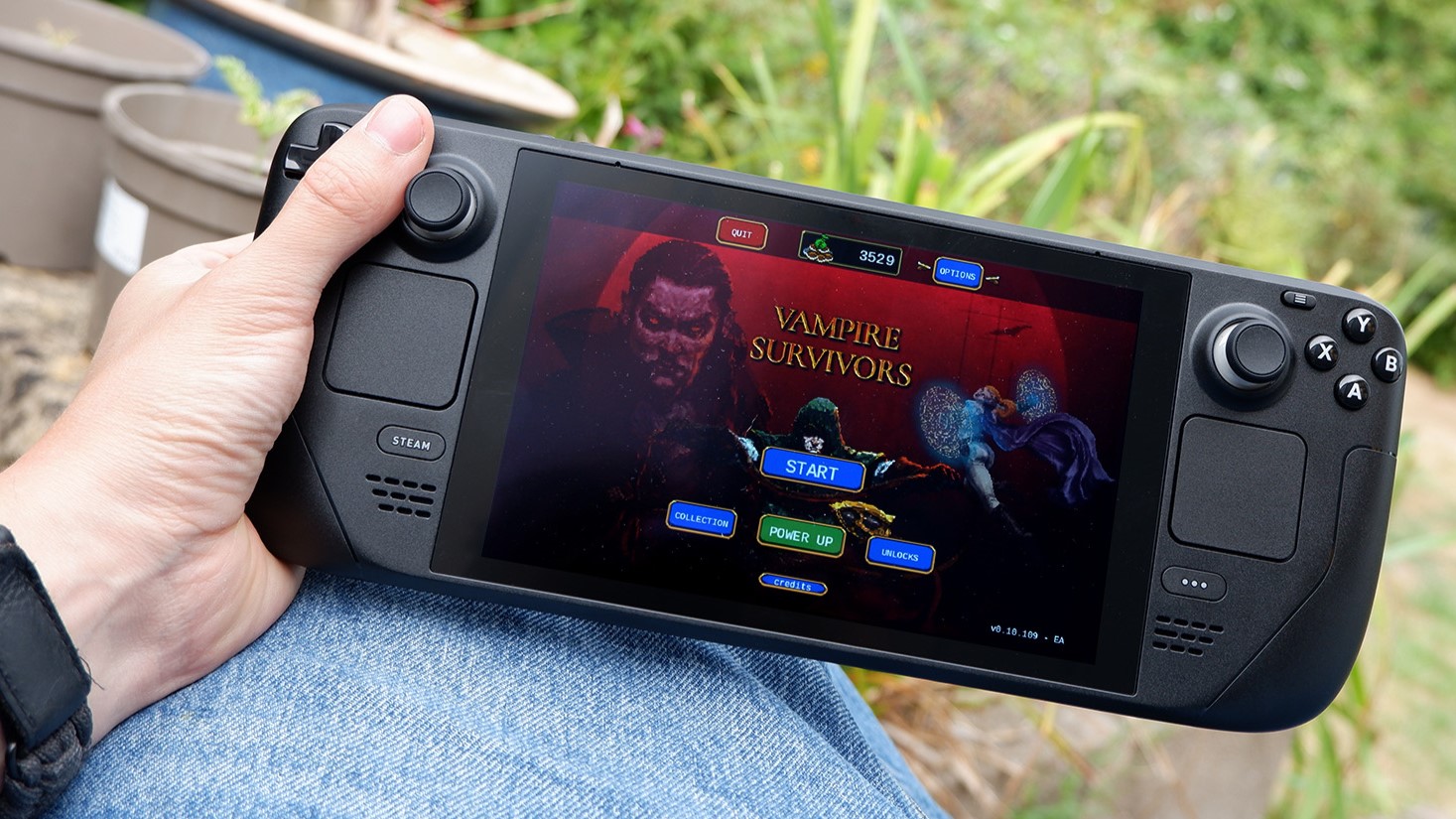
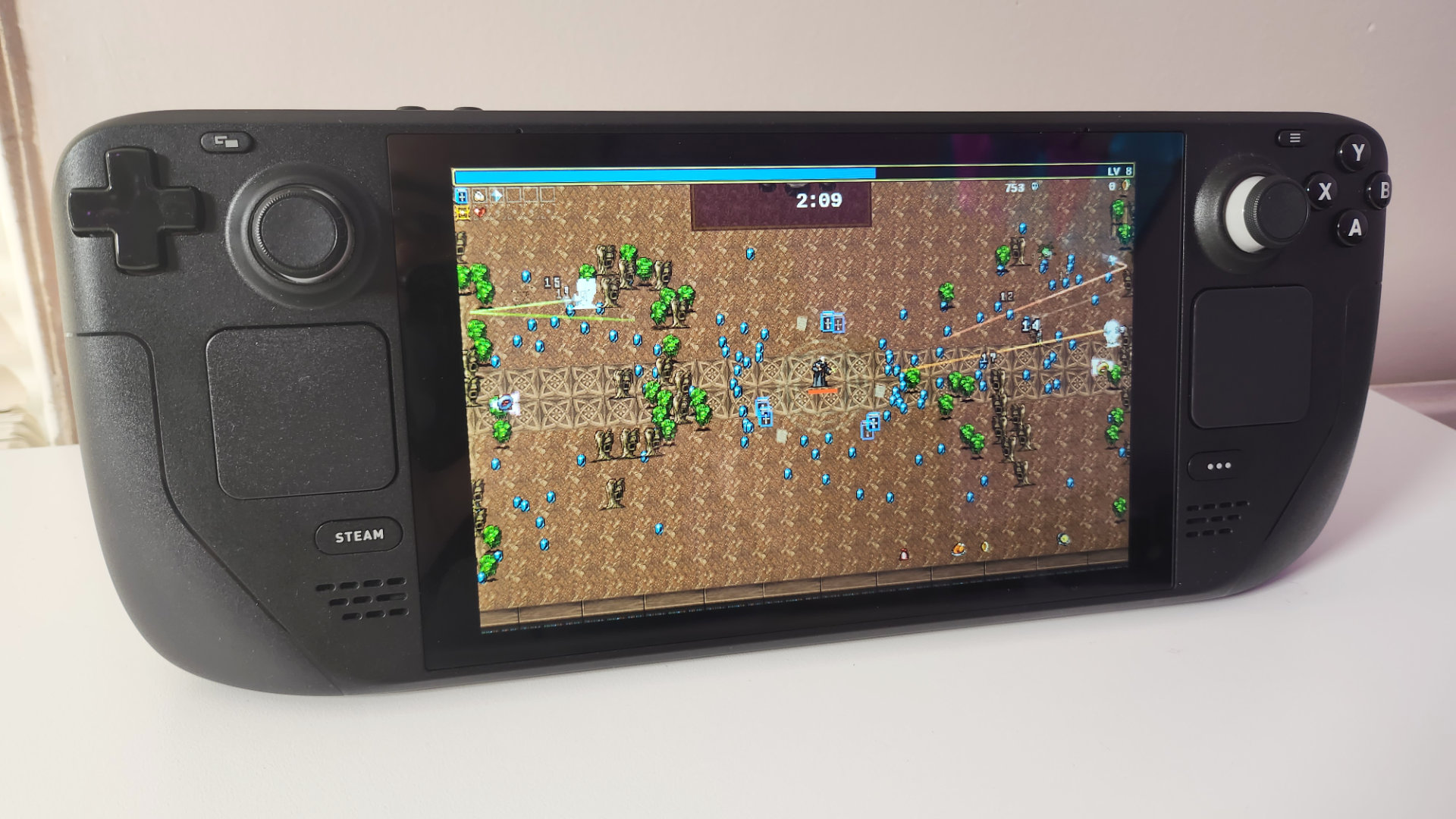
For gamers with limited time, the Steam Deck game system excels with titles like Hades, Vampire Survivors, Dead Cells, or Slay the Spire. These roguelikes and roguelites offer quick runs, satisfying progression, and are easy to pick up and put down without losing momentum. Indie puzzle games and turn-based RPGs are also fantastic choices.
How do I install games from outside the Steam Store on my Steam Deck?
To install non-Steam games on your Steam Deck game system, switch to Desktop Mode. From there, you can add executable files (EXEs) to Steam as a 'Non-Steam Game' and then use Proton compatibility layers to run them. This also applies to other game launchers like Epic Games Store or GOG, which can be installed and run via Desktop Mode.
Is the Steam Deck screen good enough for a full gaming experience?
The Steam Deck game system's screen, especially the OLED model, offers a vibrant and immersive experience for its size. While not as large as a TV or monitor, its clarity and color reproduction make games look fantastic, providing a full and engaging gaming experience without needing external displays for most titles.
How does the Steam Deck handle demanding AAA titles?
The Steam Deck game system can impressively run many demanding AAA titles, often at medium to low settings, targeting 30-40 frames per second. Games like Elden Ring, Cyberpunk 2077, and Baldur's Gate 3 are perfectly playable, though you might need to adjust graphical fidelity to balance performance and battery life.
Can I use my existing PC game library with the Steam Deck without repurchasing?
Yes, one of the biggest advantages of the Steam Deck game system is that it grants you full access to your existing Steam library. As it's essentially a portable PC, any game you own on Steam that is compatible will be available for download and play on your Deck without needing to buy it again.
What's the difference between the Steam Deck LCD and OLED models?
The primary differences between the Steam Deck game system LCD and OLED models are the screen technology, battery life, and overall weight. The OLED model features a more vibrant screen with deeper blacks, significantly longer battery life, and is slightly lighter. It also offers faster Wi-Fi 6E connectivity and an improved cooling system compared to the original LCD version.
How frequently does Valve update the Steam Deck software?
Valve regularly updates the Steam Deck game system's software, including SteamOS and its various components like Proton. These updates often bring performance improvements, bug fixes, new features, and enhanced game compatibility. Users can usually expect several updates per month, ensuring the system remains current and optimized.
In the bustling world of 2026, where 87% of US gamers regularly dedicate an average of 10+ hours a week to their passion, finding time for quality gaming can feel like a heroic feat, especially for those balancing jobs, families, and everyday life. Many of us, typically around age 36, yearn for that immersive escape or competitive thrill but are constantly battling the clock and the confines of a traditional gaming setup. You want to stay current, enjoy the latest titles, and maybe even connect with friends online, but without the hassle of a complex rig or the commitment of a dedicated gaming session at your desk. This month, the demand for flexible, high-performance gaming solutions is higher than ever, and that's precisely where the Steam Deck game system shines as a beacon for the modern gamer.
Imagine transforming your commute, lunch break, or even those quiet moments after the kids are asleep into a vibrant gaming session. The Steam Deck isn't just another handheld; it's a powerful, portable PC that brings your entire Steam library wherever you go, offering relaxation, skill-building, and social play on your terms. This article is your comprehensive guide to unlocking the full potential of your Steam Deck game system, designed to solve common pain points from setup struggles to performance woes, game recommendations for limited time, and even savvy hardware upgrades. Let's dive in and ensure your gaming experience is optimized, enjoyable, and perfectly integrated into your busy life.
What is the Steam Deck Game System and why is it a game-changer for busy adults?
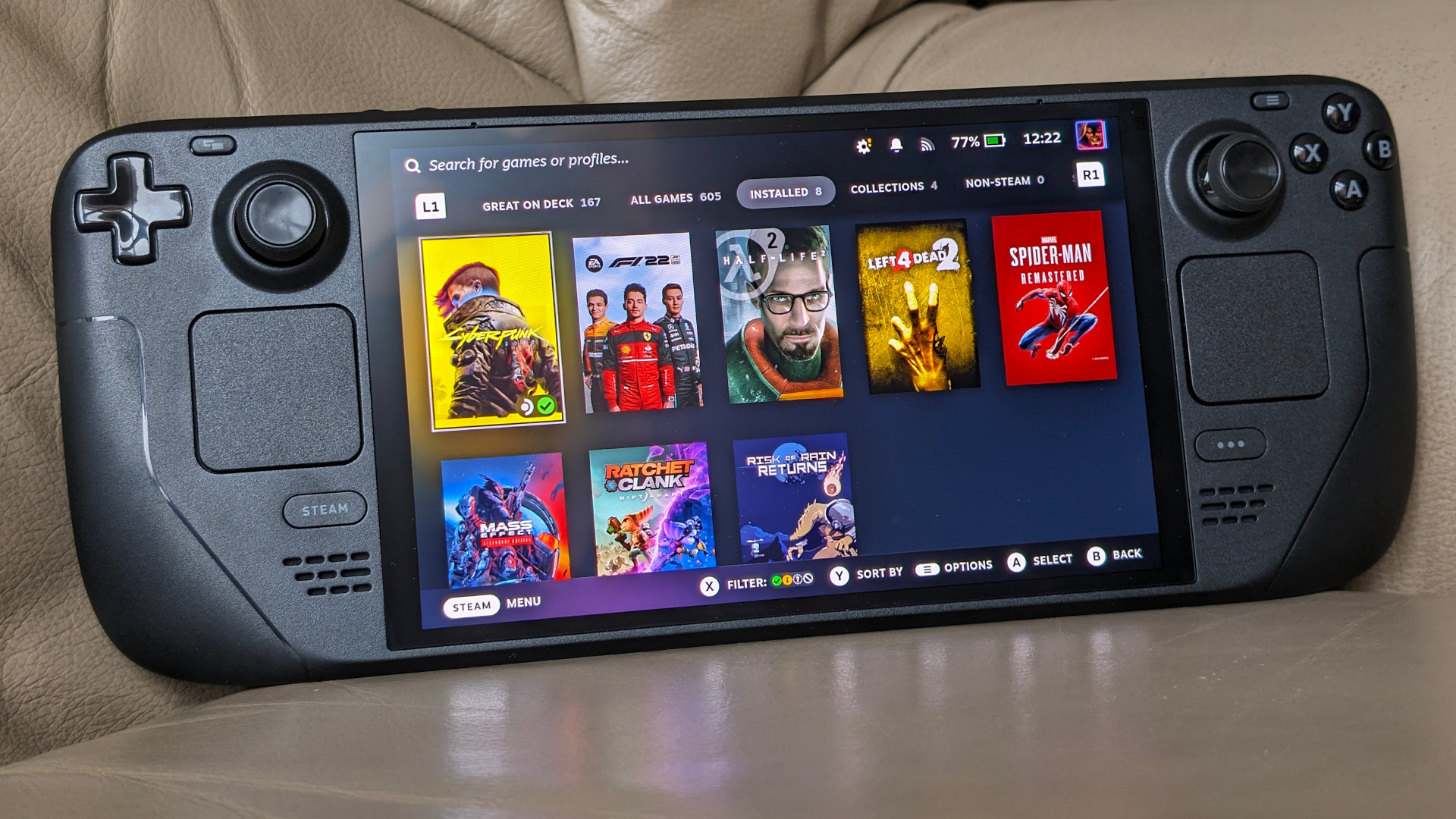
The Steam Deck game system is a handheld gaming PC developed by Valve, essentially putting the power of a gaming laptop into a portable form factor. It runs on SteamOS, a Linux-based operating system, and provides full access to your Steam library, allowing you to play thousands of PC titles on the go. For busy adults, it’s a game-changer because it eliminates the need to be tethered to a desk or TV. You can pick it up for a quick 15-minute session of a cozy indie game like 'Stardew Valley' or dive into a demanding AAA title like 'Cyberpunk 2077' during a longer break. Its portability and versatility address the core need for flexible gaming, making high-quality experiences accessible whenever and wherever you find a spare moment.
How do I get started with my new Steam Deck and avoid common setup headaches?
Getting your Steam Deck game system up and running is generally straightforward, but a few tips can smooth the process. First, ensure it's fully charged before you begin. Upon powering on, you'll be guided through initial setup, including connecting to Wi-Fi and logging into your Steam account. One common headache is slow downloads; try to use a 5GHz Wi-Fi network if available for faster game installations. Also, don't forget to update SteamOS immediately via the System settings; this ensures you have the latest performance improvements and bug fixes. For optimal performance, consider investing in a high-speed microSD card early on, as the internal storage can fill up quickly, especially with larger titles.
Which games run best on the Steam Deck and how can I find them quickly?
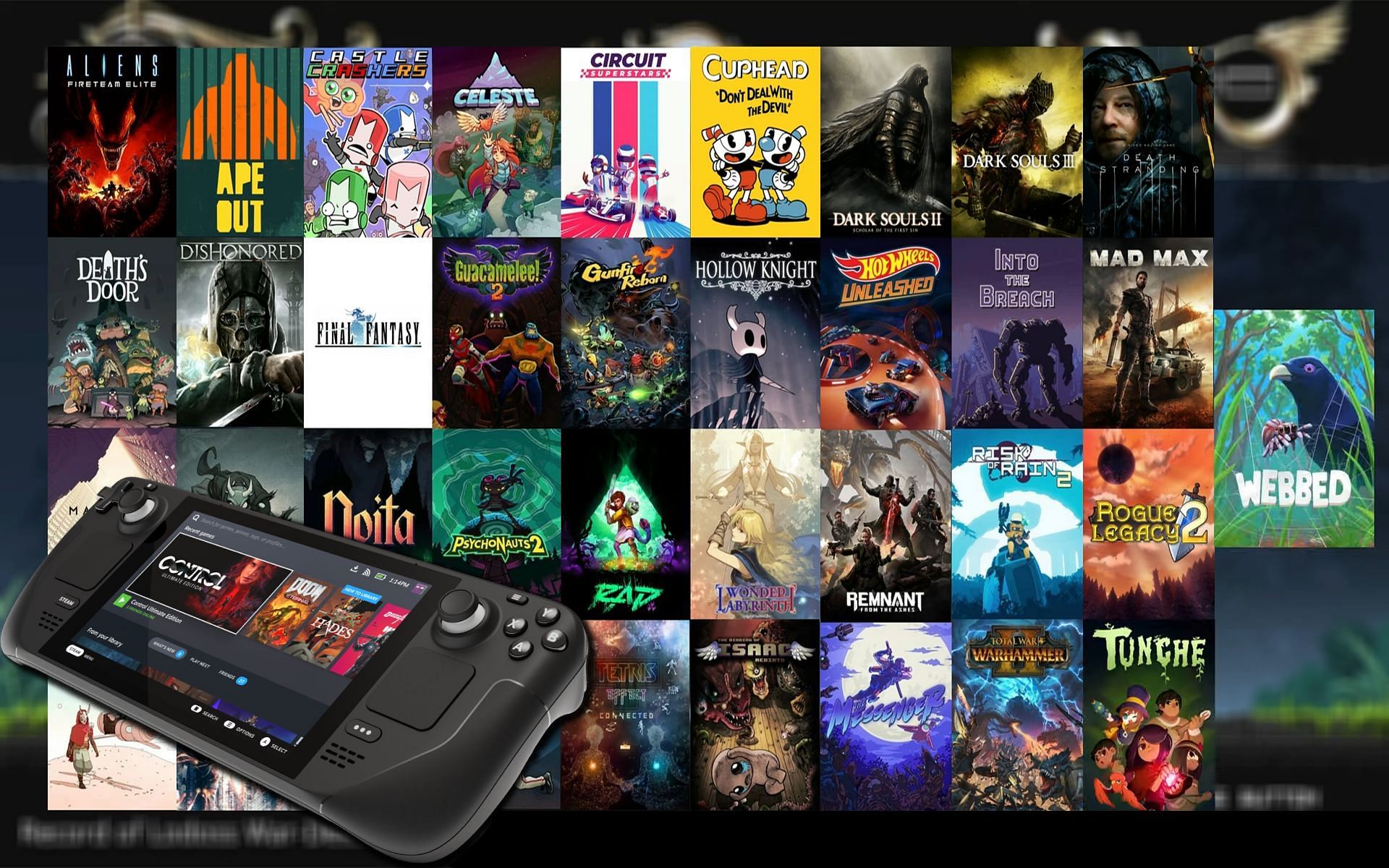
The Steam Deck game system boasts a vast library, but performance varies. Valve categorizes games as 'Verified' (flawless experience), 'Playable' (may require minor tweaks), and 'Unsupported.' Focus on 'Verified' and 'Playable' titles for the best experience. You can find these classifications directly within the Steam store on your Deck or by using the official 'Great on Deck' section. This month, popular verified titles include 'Baldur's Gate 3,' 'Hades,' 'Elden Ring,' and even many social/cozy games like 'Palia' (via ProtonGE). For quick recommendations tailored to limited time, look for roguelikes, indie gems, and turn-based RPGs that allow for easy pick-up-and-play sessions without extensive commitment.
How can I optimize Steam Deck performance for smoother gameplay and longer battery life?
Optimizing your Steam Deck game system involves a few key settings. Navigate to the Quick Access Menu (the '...' button) during gameplay. Here, you can adjust the Thermal Power Limit (TDP) to reduce power consumption and extend battery life, though this might slightly lower frame rates. Lowering the screen refresh rate (Hz) from 60Hz to 40Hz or 30Hz can also significantly improve both battery life and perceived smoothness, especially in visually demanding games. Experiment with in-game graphics settings, often finding a sweet spot between 'Medium' and 'Low' can provide a stable 30-40 FPS without compromising visual quality too much. Regularly updating Proton GE (a compatibility layer for Windows games) can also unlock performance gains for unsupported or problematic titles.
What are the best accessories for the Steam Deck to enhance my gaming experience?
Enhancing your Steam Deck game system experience often starts with the right accessories. A high-quality microSD card (UHS-I, A2 rated) is essential for expanding storage, given the size of modern games. A comfortable carrying case protects your investment while on the go. For home use, a docking station (official or third-party) allows you to connect to a TV, monitor, and external peripherals like keyboards, mice, or external controllers, transforming your Deck into a desktop or console experience. A good USB-C hub with power delivery is a versatile alternative to a full dock. Screen protectors, ergonomic grips, and portable power banks also rank high for frequent users, ensuring comfort and uninterrupted play.
Can the Steam Deck replace my gaming PC or console for casual play?
For many gamers, especially those focused on casual play, the Steam Deck game system can absolutely serve as a primary gaming device, or at least a powerful supplementary one. It won't typically outperform a high-end desktop gaming PC for raw horsepower or competitive esports at maximum settings, but for most single-player adventures, indie games, and even many demanding AAA titles, it delivers a very satisfying experience. For adults balancing life, the convenience of picking up where you left off anywhere often outweighs the marginal graphical fidelity difference. It's an ideal choice for someone who wants access to a vast PC game library without the significant financial investment and space requirements of a traditional gaming rig, fitting perfectly into the current trend of accessible, on-demand entertainment.
How do I manage my game library and storage efficiently on the Steam Deck?
Efficiently managing your game library on your Steam Deck game system is crucial for a smooth experience. The Deck allows you to install games on both the internal SSD and any inserted microSD cards. You can easily move games between these storage locations through the SteamOS settings; simply navigate to a game in your library, select the gear icon, go to 'Properties,' then 'Local Files,' and choose 'Move Install Folder.' To prevent clutter, regularly uninstall games you've finished or aren't playing, especially large AAA titles. Consider organizing your library with Steam's collection features, grouping games by genre, completion status, or even suitability for short play sessions. This month, with many new releases, smart storage management ensures you're always ready for your next adventure.
What are the social gaming options and community features on the Steam Deck?
The Steam Deck game system is inherently connected to the Steam ecosystem, which is a massive social hub. You can easily access your Steam friends list, chat, join parties, and even utilize Steam Remote Play Together to stream local co-op games to friends online. Beyond Steam, the Linux desktop mode allows for installing third-party communication apps like Discord, which is essential for many modern US gamers to coordinate play sessions or simply chat with their communities. While the Deck's built-in controls are great for single-player, pairing external Bluetooth controllers for local multiplayer is simple, fostering shared gaming experiences with family or friends. The community around the Steam Deck itself is also vibrant, with subreddits and forums dedicated to sharing tips, tricks, and game recommendations, mirroring the broader social trends in gaming where connection is key.
Are there budget-friendly ways to expand my Steam Deck's capabilities?
Absolutely! Expanding your Steam Deck game system's capabilities doesn't have to break the bank. The most cost-effective upgrade is a high-capacity, fast microSD card. Brands like SanDisk, Samsung, and Lexar offer great performance for the price. Instead of an official (and often pricier) dock, consider a generic USB-C hub with HDMI output, USB-A ports, and power delivery – these can be found for a fraction of the cost and provide similar functionality for connecting to external displays and peripherals. For gamers comfortable with a bit of DIY, replacing the internal SSD with a larger NVMe drive is a popular and relatively budget-friendly upgrade, though it requires some technical know-how. Finally, keeping an eye on Steam sales is the best way to expand your game library without overspending, offering incredible value for money.
How does the Steam Deck fit into modern gaming trends like mobile and cloud gaming?
The Steam Deck game system sits at a fascinating intersection of modern gaming trends, offering a compelling alternative and complement to both mobile and cloud gaming. While dedicated mobile gaming thrives on touch interfaces and bite-sized experiences (often free-to-play), the Steam Deck provides a console-quality experience with physical controls, leveraging the vast PC library. It bridges the gap for gamers who enjoy the portability of mobile but crave deeper, graphically richer games. Regarding cloud gaming, the Deck can absolutely stream services like Xbox Cloud Gaming or GeForce NOW, turning it into a powerful streaming client and offering access to games beyond its local capabilities without needing high-end internal hardware. This flexibility aligns with the Gen Z/Millennial preference for cross-play and accessibility, allowing gamers to choose the best platform for their desired experience without sacrificing quality or convenience. This month, we've seen an increased interest in hybrid approaches to gaming, and the Steam Deck embodies this perfectly.
Frequently Asked Questions about the Steam Deck Game System
What's the ideal storage size for a Steam Deck?
For most gamers, a 256GB or 512GB internal SSD paired with a 1TB high-speed microSD card offers a good balance of cost and capacity. This setup allows you to keep your most-played games on the faster internal storage and larger titles on the external card.Can I install Windows on the Steam Deck?
Yes, the Steam Deck game system fully supports installing Windows, either as the primary OS or in a dual-boot configuration with SteamOS. This provides compatibility with games and applications that might not run optimally via Proton on SteamOS, though it may impact battery life and driver support.How do I improve Steam Deck battery life?
To extend battery life on your Steam Deck game system, lower the screen brightness, enable the frame rate limiter (e.g., to 30 FPS or 40 FPS), adjust the Thermal Power Limit (TDP) in the Quick Access Menu, and consider reducing in-game graphical settings. Playing less demanding indie titles also naturally conserves power.Is the Steam Deck good for competitive online gaming?
While capable, the Steam Deck game system isn't typically the first choice for highly competitive online gaming due to its smaller screen, integrated controls (which might be less precise than a dedicated keyboard/mouse or pro controller), and potential Wi-Fi latency. However, for casual online play, it performs admirably, especially when docked with external peripherals.What is Proton and why is it important for the Steam Deck?
Proton is a compatibility layer developed by Valve that allows Windows-native games to run on Linux-based operating systems like SteamOS. It's crucial for the Steam Deck game system because it enables vast majority of PC games, which are designed for Windows, to be played seamlessly on the handheld, greatly expanding its library beyond native Linux titles.Can I connect a keyboard and mouse to the Steam Deck?
Yes, you can connect a keyboard and mouse to your Steam Deck game system via Bluetooth or USB. When docked, or with a USB-C hub, you can plug in wired peripherals. This is especially useful when using the Deck in desktop mode for productivity tasks or playing strategy games that benefit from mouse and keyboard input.Is the Steam Deck still worth buying in 2026 with new handhelds coming out?
Even with new handhelds entering the market in 2026, the Steam Deck game system remains a highly compelling choice. Its integration with the Steam ecosystem, active community support, and Valve's continuous software updates provide excellent value. It strikes a strong balance between performance, price, and portability, making it a solid investment for gamers seeking a versatile portable PC gaming experience without the premium price tag of some competitors.The Steam Deck game system truly empowers the modern gamer, offering a flexible and powerful way to enjoy your favorite titles on your own terms. Whether you're optimizing performance, discovering new games, or connecting with friends, it’s a tool designed to fit seamlessly into your life. Embrace the freedom and fun it offers, because gaming should always be a source of relaxation and joy, not another chore to manage.
What's your biggest gaming challenge with portable systems? Comment below and let's conquer it together!
Portable PC gaming, Vast Steam library access, Customization and modding potential, Ergonomic design, Flexible play anywhere, Regular software updates, Budget-friendly console alternative, Dockable for TV play
35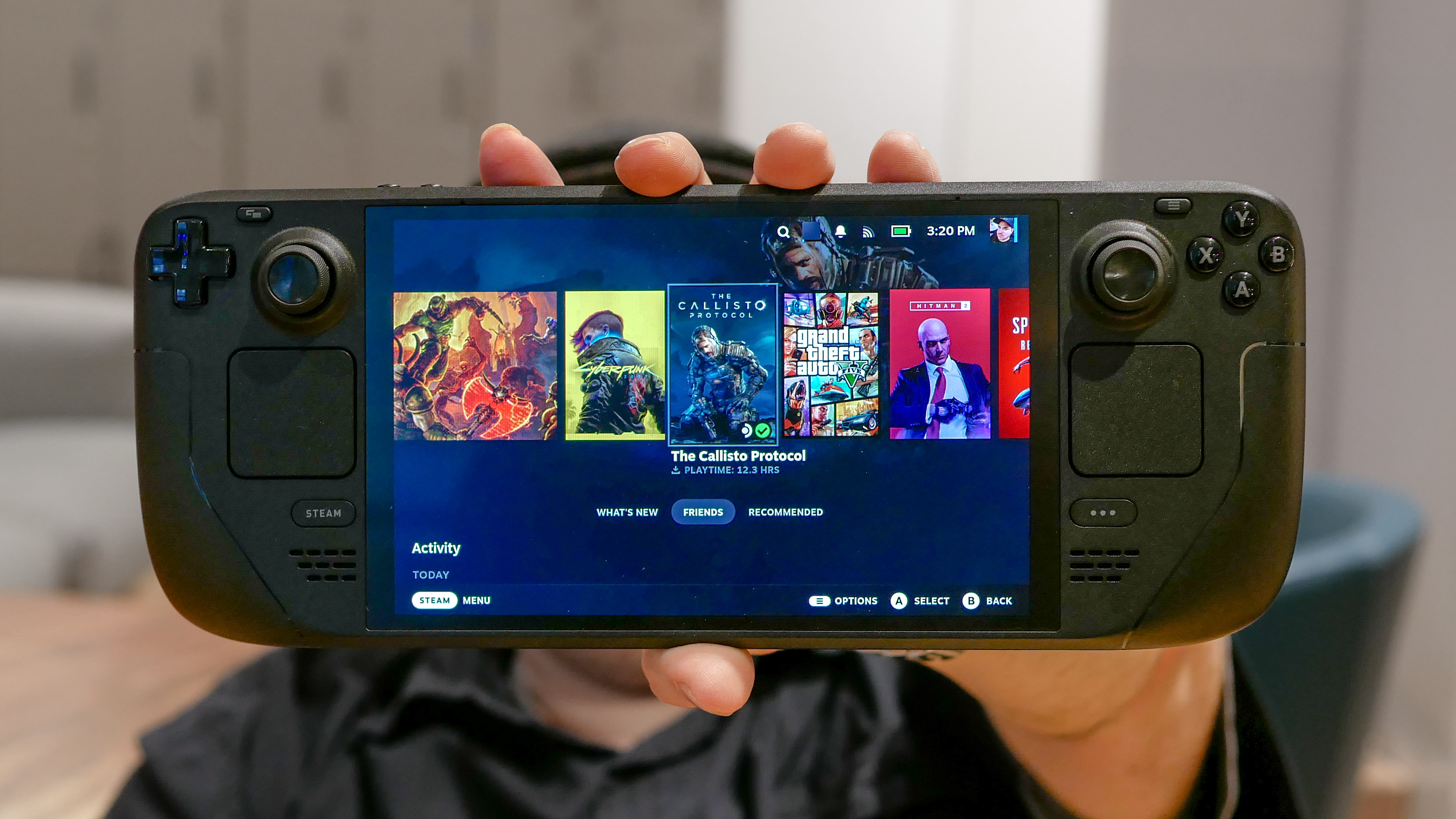


Is The Steam Deck Still Worth It In 2025 I D Argue Yes But With . Steam Deck Oled Im Test Steam Deck OLED Im Test Ein Starkes Upgrade Steam Deck Oled Review Featured . STEAM DECK O MELHOR CONSOLE PRA 2026 YouTube . Handheld Consoles In 2026 Why Nintendo Steam Deck And Portable Image 8 768x457 . All Steam Deck Verified Games April 2026 Gamer Journalist Steam Deck


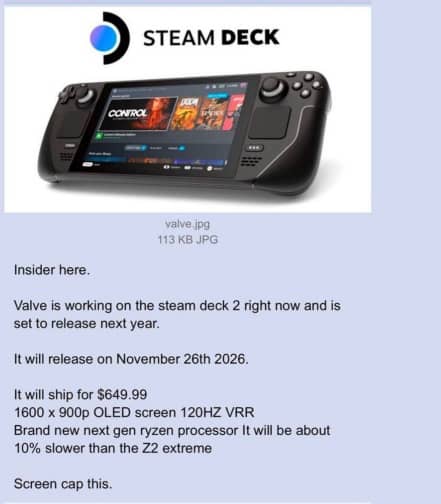
Steam Deck OLED Vs ROG Ally X 2026 Handheld Showdown Steam Deck OLED Vs ROG Ally X 2026 . Steam Deck OLED In 2026 Review Performance Value And Buying Advice Stream Ps5 Games On Steam Deck Oled.webp. Steam Deck Verified Games Steambase Social Media Image . The Best PC Hardware And Software Of 2025 2026 PCWorld PPH22 054 SteamDeck 01.webp. Steam Deck 2 Erscheint Am 26 November 2026 Mit 120 Hz OLED Display Und Sd2



Top 10 Strategy Games On Steam Deck 2026 YouTube . Steam Deck OLED In 2026 Review Performance Value And Buying Advice GeForce Now Ultimate Steam Deck 3 . The Cheapest Steam Deck Is Heading Into Retirement And I M Already . Best Steam Deck Games To Play In 2026 TOP 5 Best Deck. Steam Deck Announces Exciting New Video Game Console Set Steam Deck Announces Exciting New Video Game Console Set For 2026 Launch Gaming News Update

Get A Steam Deck For Less Than A Switch Thanks To This Amazing Sale . ROG Ally Vs Steam Deck In 2026 Which Handheld Wins Rog Ally Vs Steam Deck . Steam Console Release Date Steam Deck Scaled . Steam Deck In 2026 The Most Affordable Gaming Option NoobFeed GeForce Now Ultimate Steam Deck Cover . 16 Deal New Humble Bundle Packs 9 Well Rated Steam Deck Compatible A Steam Deck Device11

Steam Decks Are On Sale For Steam S 20th Birthday PC Gamer . Steam Deck Gets New Update For October 2024 Steam Deck Oled Header 3 4 . Steam Deck OLED B Zi Regionlarda Stokdan Xa Bil R Technote . Best Steam Deck Games 2026 Great Games On The Go Best Steam Deck Games . Day One Xbox Game Pass Game Confirmed For November 26 Steam Deck



Best Steam Deck Games In 2026 Ultimate Guide Geeky Gadgets Forza Horizon Deck.webp. How To Install Windows On Steam Deck The In Depth Guide Windows On Steam Deck Header . T M Hi U V Valve V M U M Y Steam Deck Nh M Th C Y Th Tr Ng 8383078 Steam Deck 2 Release Date . AMD Radeon RX 9000 Review Roundup Windows Central . Steam Deck Maker To Launch New Video Game Console In 2026 Gaming News



All Steam Deck Verified And Playable Games So Far F6fc4 1920 . Is The Steam Deck Still WORTH IT In 2026 YouTube . Valve Has Announced Three New Hardware Joining Steam Deck In 2026 . Rumor Here S What Steam Deck 2 S Specs Are Now Gameranx Steam Deck Review Lead Scaled . One Of 2026 S First Big RPGs Gets Steam Deck Verified ComicBook Com Steam Deck Resize